
Introduction
The North Eastern Region of India recorded its peak power demand for the period April‑May 2026, providing a clear snapshot of electricity consumption across eight states. Understanding these figures is essential for utilities, policymakers, and investors who need to plan capacity, manage grid stability, and assess future energy needs in a rapidly developing region.
What Does the Data Reveal About This Topic?
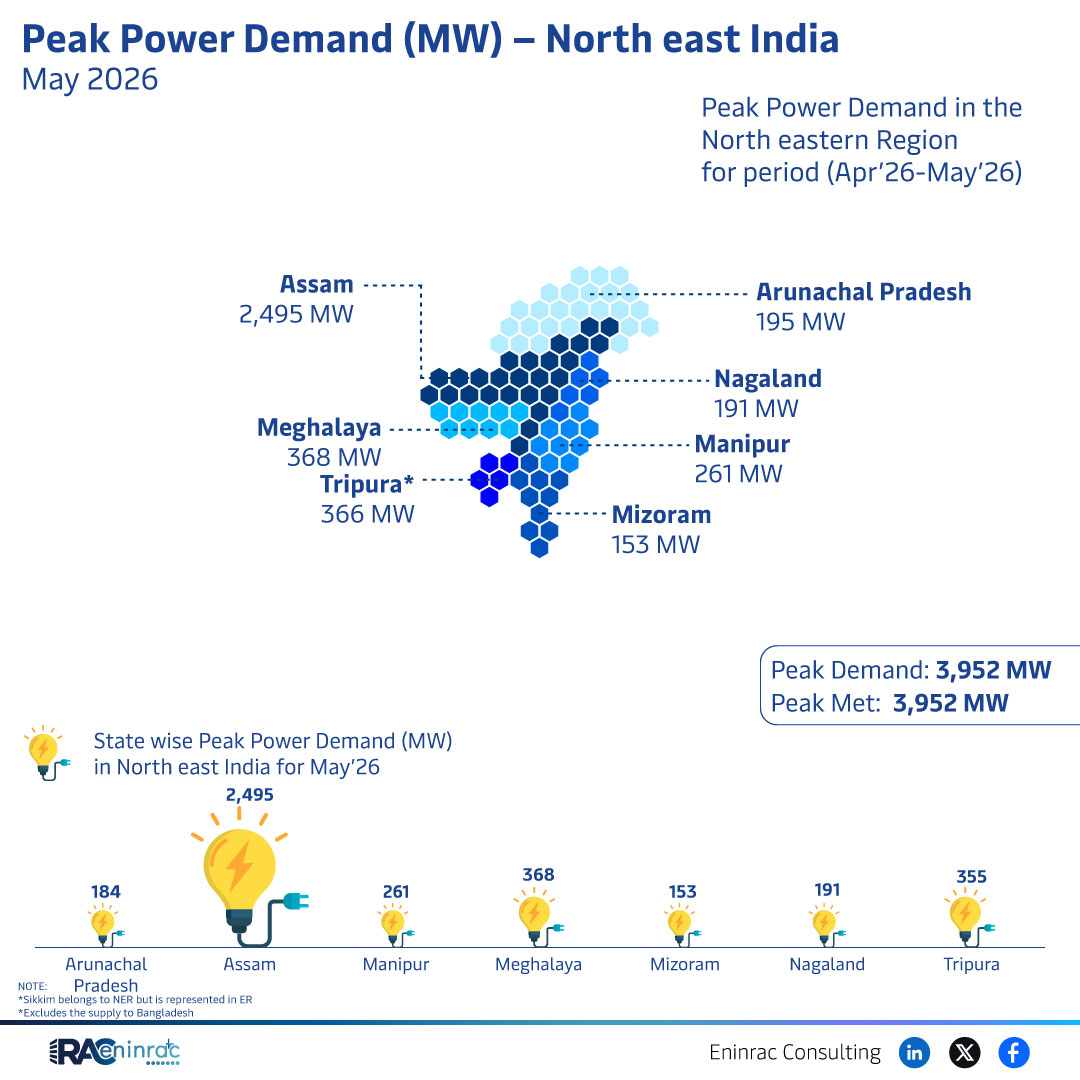
The data shows that the total peak demand across the North East reached 3,952 MW in May 2026, with Assam alone contributing 2,495 MW, accounting for more than half of the regional total. This concentration highlights Assam’s dominant role in regional electricity consumption and underscores the importance of targeted infrastructure upgrades there.
State‑wise Comparison of Peak Power Demand
When the numbers are broken down, Assam leads with 2,495 MW, followed by Tripura at 366 MW and Manipur at 261 MW. Arunachal Pradesh, Meghalaya, Mizoram, Nagaland, and the combined figure for the remaining states each register below 200 MW, indicating a steep gradient in demand from the larger to the smaller states. The disparity suggests differing levels of industrial activity, urbanization, and electrification progress across the region.
Impact on Sectors and Industries
High peak demand in Assam drives investment in generation assets, transmission upgrades, and demand‑side management programs. Power‑intensive industries such as tea processing, oil refineries, and emerging IT parks rely on reliable supply, making the peak figures a key metric for capacity planning. In smaller states, lower demand may limit large‑scale industrial projects but also reduces pressure on existing grid infrastructure, allowing focus on rural electrification and renewable integration.
Key Takeaways
- Assam accounts for roughly 63% of the North East’s total peak demand.
- The region’s overall peak demand reached 3,952 MW in May 2026.
- Tripura and Manipur are the next highest demand states, each below 400 MW.
- All other states report peak demand under 200 MW, highlighting uneven consumption patterns.
- Infrastructure investment is most urgently needed in Assam to sustain growth.
- Policymakers can use these figures to prioritize renewable integration in lower‑demand states.
FAQs
Which state had the highest peak power demand in May 2026?
Assam recorded the highest peak demand at 2,495 MW.
What was the total peak demand for the North East region?
The combined peak demand across all eight states was 3,952 MW.
How does Tripura’s demand compare to Assam’s?
Tripura’s peak demand of 366 MW is about 15% of Assam’s 2,495 MW.
Why is peak demand important for grid planning?
Peak demand indicates the maximum load the grid must support, guiding capacity expansion, reliability measures, and investment decisions.
What opportunities exist for renewable energy in lower‑demand states?
States with lower demand can more easily integrate solar and small‑hydro projects without overloading existing infrastructure.