
Introduction
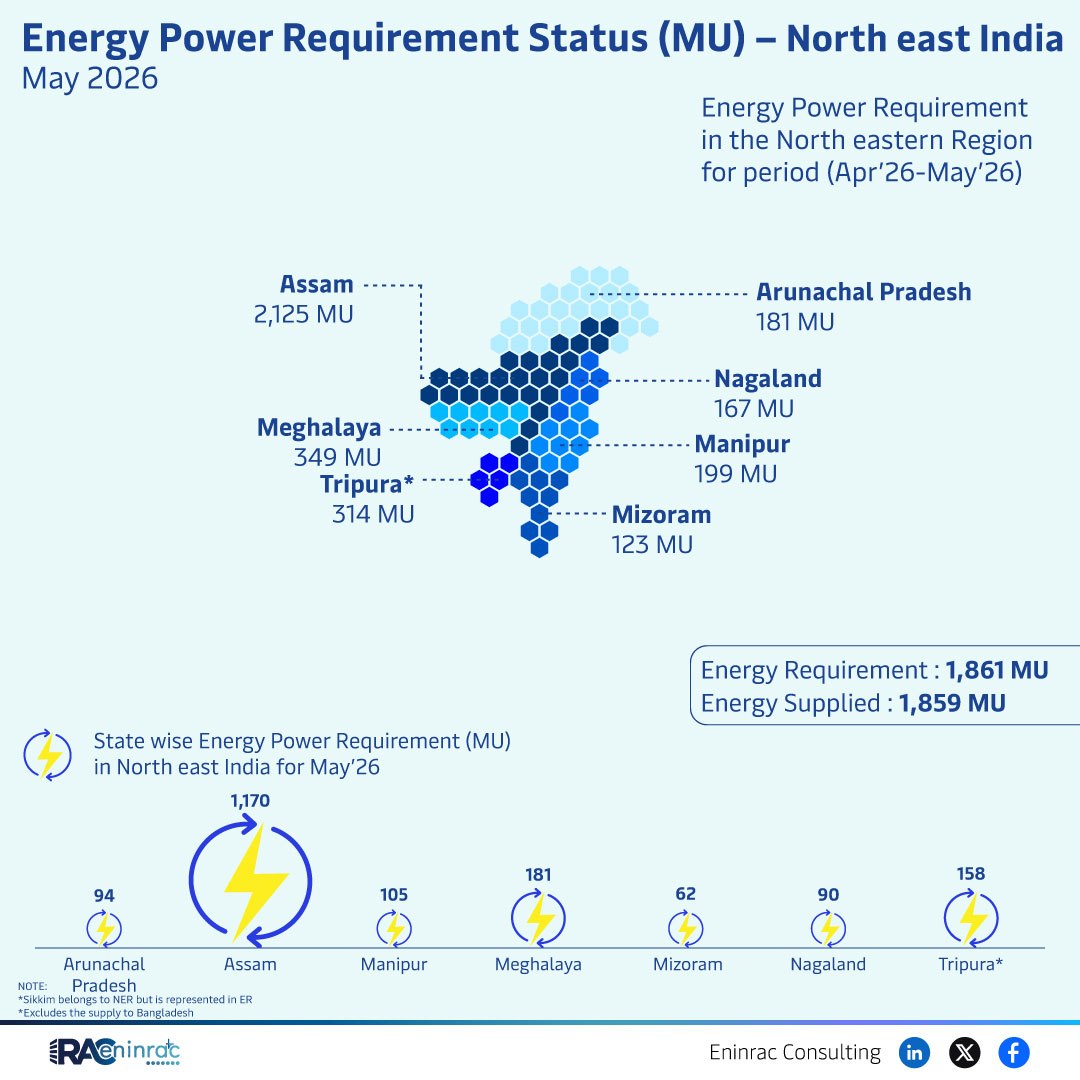
The latest power statistics for May 2026 reveal the energy landscape of North East India. With a total demand of 1,861 MU and a supplied volume of 1,859 MU, the region demonstrates a near‑balance between consumption and generation. This overview breaks down state‑wise requirements, highlights the marginal shortfall, and explains why these figures matter for policymakers, investors, and consumers across the seven Northeastern states.
What Does the Data Reveal About This Topic?
At first glance the data shows that the overall energy demand of the North East is almost fully met, but a tiny deficit of 2 MU persists. The question many ask is whether this gap signals future supply risks or simply reflects routine scheduling variations. The answer lies in the distribution of demand across states, where some regions such as Meghalaya and Manipur show higher consumption relative to their generation capacity.
State‑wise Energy Demand Comparison
Analyzing the numbers state by state uncovers clear patterns. Assam records a demand of approximately 167 MU, while Arunachal Pradesh contributes around 181 MU. Manipur’s requirement stands at 199 MU and Meghalaya leads with about 349 MU. Mizoram, Nagaland and Tripura register demands of 123 MU, 167 MU and 158 MU respectively. Meghalaya’s figure emerges as the highest, indicating a robust industrial and residential growth, whereas Tripura’s lower demand reflects its smaller population and limited industrial activity. These variations guide targeted infrastructure investments.
Impact on Sectors and Industries
The near‑balanced supply‑demand scenario influences several sectors. Power generation companies must fine‑tune dispatch schedules to avoid over‑generation, while distribution utilities need to ensure reliable transmission to high‑demand states like Meghalaya. Investors see opportunities in renewable projects that can fill the marginal shortfall and enhance grid stability. Policymakers can use the state‑wise breakdown to prioritize grid upgrades, demand‑side management, and cross‑border energy trade strategies, especially where supply constraints are tighter.
Key Takeaways
- Total North East demand in May 2026 is 1,861 MU.
- Supply reached 1,859 MU, leaving a 2 MU shortfall.
- Meghalaya records the highest state demand at 349 MU.
- Assam and Arunachal Pradesh show moderate demand levels.
- Tripura and Mizoram have the lowest requirements among the seven states.
- Minimal shortfall suggests stable supply but highlights need for strategic planning.
FAQs
What is the total energy demand for North East India in May 2026?
The region required 1,861 MU of electricity during that month.
How much energy was actually supplied?
Suppliers delivered 1,859 MU, covering almost all of the demand.
Which state has the highest electricity requirement?
Meghalaya leads with an estimated 349 MU demand.
Is the 2 MU shortfall a cause for concern?
It indicates a very small gap, but planners should monitor trends to prevent future deficits.
How can policymakers address the varying state demands?
By focusing on grid reinforcement, renewable integration, and targeted supply improvements in higher‑demand states.