
Introduction
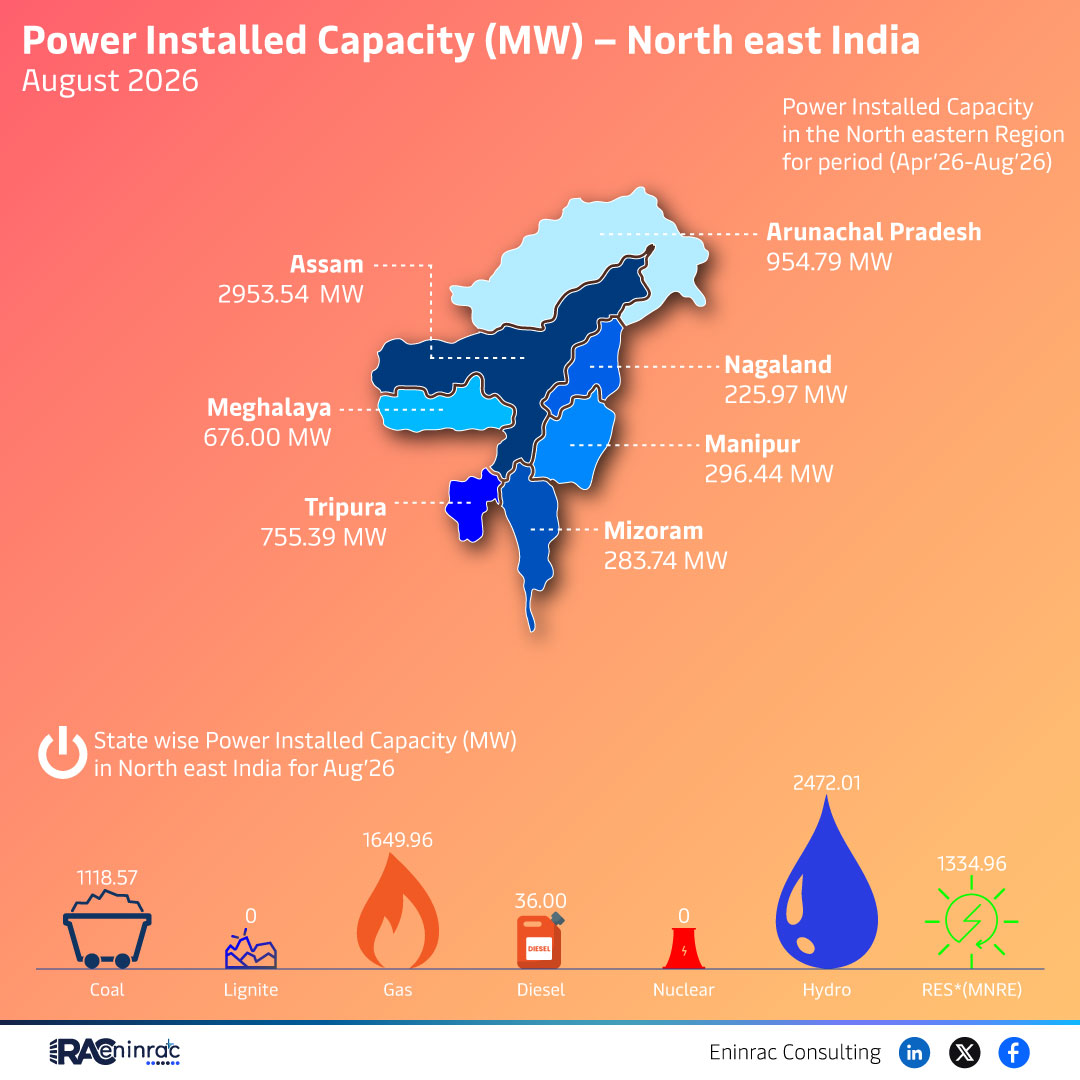
The Power Installed Capacity data for North East India covering the period April 2026 to August 2026 provides a snapshot of how much electricity generation capability each state possesses. Understanding this capacity is crucial for policymakers, investors, and consumers because it highlights regional energy availability, infrastructure development, and future growth potential. In this article we examine the state‑wise figures, identify leading contributors, and discuss the implications for the broader power sector.
What Does the Data Reveal About This Topic?
What does the data reveal about power installed capacity in the North East region? The figures show that Assam leads with approximately 954.79 MW of installed capacity, while other states such as Meghalaya, Tripura and Mizoram contribute between 283 and 756 MW. The fuel mix includes coal, lignite, gas, diesel, nuclear, hydro and renewable sources, indicating a diverse energy portfolio across the eight states.
State‑wise Power Installed Capacity in August 2026
When comparing the eight states, Assam has the highest installed capacity at 954.79 MW, followed by Meghalaya with 676.00 MW of capacity and Tripura showing 755.39 MW. Manipur, Mizoram and Arunachal Pradesh report lower capacities of 296.44 MW, 283.74 MW and an unspecified value respectively. The aggregated totals for the region indicate 2,472.01 MW from coal, 1,649.96 MW from lignite and 118.57 MW from gas, highlighting the continued reliance on fossil fuels while renewable energy (RES) contributions are emerging but remain modest.
Impact on Sectors and Industries
The distribution of power installed capacity affects multiple sectors. Heavy industry and mining in Assam benefit from higher coal‑based capacity, whereas hydro‑rich states like Meghalaya support agricultural irrigation and tourism through reliable electricity. Investors see opportunities in expanding renewable portfolios, especially in states with untapped hydro potential. Policymakers can use the data to prioritize grid upgrades, encourage cleaner fuels, and address regional disparities to ensure energy security for consumers.
Key Takeaways
- Assam holds the largest power installed capacity in the North East with 954.79 MW.
- Coal remains the dominant fuel source, accounting for over 2,400 MW of capacity.
- Lignite and gas together contribute around 1,770 MW, indicating a mixed fossil fuel dependency.
- Renewable energy sources are present but represent a relatively small share of the total capacity.
- States such as Meghalaya and Tripura show significant capacity despite smaller populations.
- Targeted investment in renewable and hydro projects could balance the region’s heavy reliance on coal.
FAQs
Which state has the highest power installed capacity in August 2026?
Assam leads with approximately 954.79 MW of installed capacity.
What is the total coal‑based capacity for the North East region?
The coal‑based capacity totals about 2,472.01 MW.
How much renewable energy capacity is reported?
Renewable energy capacity is indicated but specific megawatt figures are not detailed, suggesting a modest contribution.
Are there any states with significant gas‑based capacity?
Gas‑based capacity across the region is limited to about 118.57 MW.
What trends are expected for future power capacity in the region?
Analysts expect gradual growth in renewable and hydro capacity, alongside continued reliance on coal and lignite until new policies drive a cleaner energy mix.