
Introduction
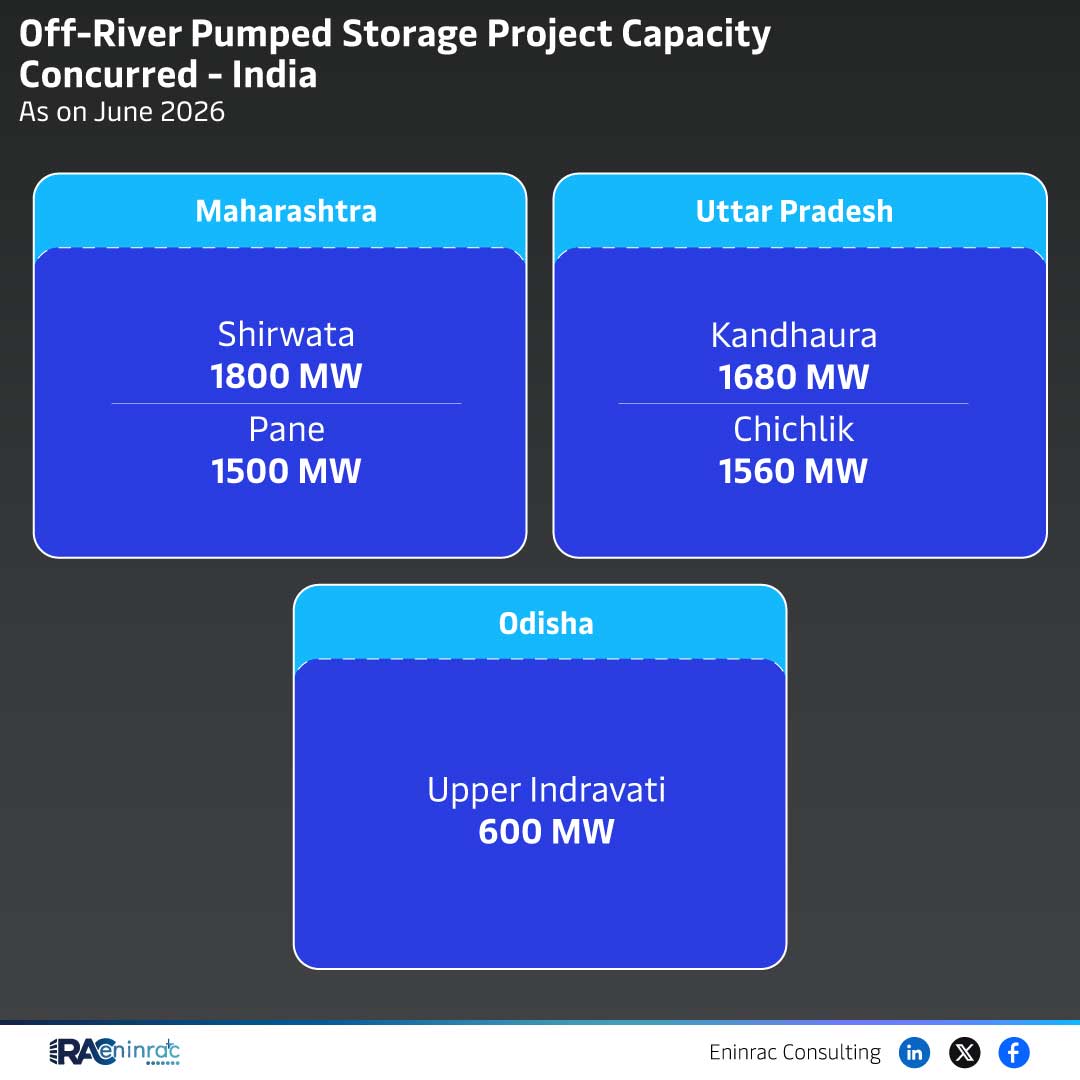
The off‑river pumped storage sector in India is rapidly expanding as of June 2026. Recent data highlights the installed capacities of three major projects—Shirwata Kandhaura, Pane Chichlik, and Upper Indravati. Understanding these figures helps stakeholders assess the growth trajectory of renewable energy storage, gauge regional commitments, and anticipate future investments in grid stability.
What Does the Data Reveal About This Topic?
The data shows that Shirwata Kandhaura and Pane Chichlik each have two capacity values, likely representing planned versus operational megawatt ratings, while Upper Indravati lists a single figure. This suggests a mix of mature and developing projects, with Shirwata Kandhaura leading at 1,800 MW (planned) and 1,680 MW (actual), Pane Chichlik close behind, and Upper Indravati providing a smaller but significant 600 MW contribution.
Capacity Comparison of Major Off‑River Projects
When comparing the three sites, Shirwata Kandhaura stands out as the largest off‑river pumped storage capacity, offering a potential 1,800 MW of power. Pane Chichlik follows with a planned 1,500 MW and a slightly higher actual figure of 1,560 MW, indicating possible upgrades or efficiencies. Upper Indravati, at 600 MW, serves as a regional hub that supports local grid balancing but remains modest in scale. The variance between planned and operational figures underscores the dynamic nature of project commissioning in India's renewable landscape.
Impact on Sectors and Industries
Enhanced off‑river pumped storage capacity directly benefits the power generation sector by providing flexible, on‑demand energy that can smooth intermittent renewable output. Transmission networks gain reliability as stored energy can be injected during peak demand periods, reducing strain on long‑distance lines. Investors see reduced risk profiles for renewable portfolios, while policymakers can meet national targets for clean energy and grid resilience. Consumers ultimately benefit from more stable electricity prices and fewer outages.
Key Takeaways
- Shirwata Kandhaura holds the highest reported capacity at 1,800 MW.
- Pane Chichlik’s actual capacity exceeds its planned figure, indicating successful optimization.
- Upper Indravati contributes 600 MW, supporting regional grid stability.
- The mix of planned and operational figures reflects an evolving off‑river pumped storage market.
- Increased storage capacity enhances renewable integration and reduces reliance on fossil‑fuel peaking plants.
- Stakeholders across generation, transmission, and policy domains benefit from expanding storage assets.
FAQs
What is off‑river pumped storage?
It is a form of hydroelectric energy storage that uses reservoirs located away from natural river systems to store and generate power.
Why does Shirwata Kandhaura have two capacity numbers?
The dual figures typically represent the project's planned maximum capacity and its currently commissioned operational capacity.
How does pumped storage support renewable energy?
It stores excess electricity from wind or solar during low demand and releases it when generation drops, balancing supply and demand.
Are there environmental concerns with off‑river projects?
While off‑river sites avoid direct river disruption, they still require land use and careful management of water resources.
What future trends are expected for pumped storage in India?
Capacity is expected to grow as the government promotes storage solutions to meet its ambitious clean‑energy goals.