
Introduction
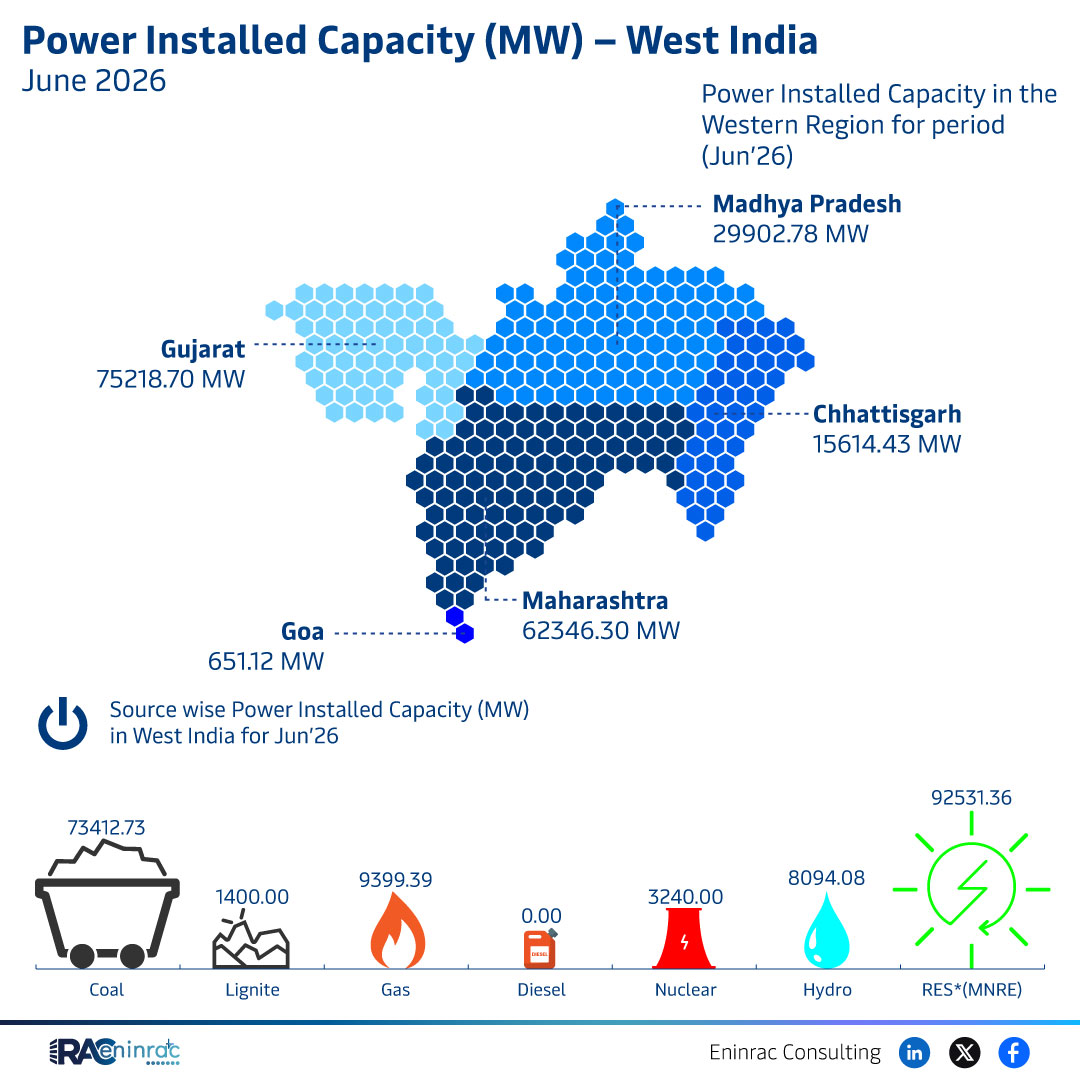
The June 2026 snapshot of West India power installed capacity provides a clear view of how electricity generation resources are distributed across key states. Understanding this data helps policymakers, investors, and industry professionals gauge regional energy strength, plan future projects, and assess the balance between traditional and renewable sources.
What Does the Data Reveal About This Topic?
Which states lead in installed capacity and how do different fuel sources contribute? The data shows Gujarat tops the region with roughly 75,219 MW, followed by Goa at 62,346 MW, while Madhya Pradesh holds about 29,903 MW. Coal, gas, hydro, and renewable energy each play distinct roles, highlighting a mixed generation mix that still relies heavily on fossil fuels.
Regional Comparison of Installed Capacity in West India
When comparing statewise figures, Gujarat’s capacity dwarfs its neighbours, reflecting aggressive expansion of thermal and renewable plants. Goa, despite its smaller geographic size, registers a substantial 62,346 MW, driven by a blend of hydro and renewable projects. Maharashtra’s reported figure of 651 MW appears to represent a specific segment, possibly diesel‑based capacity, indicating a need for further data clarification. Madhya Pradesh and Chhattisgarh contribute 29,903 MW and 15,614 MW respectively, with notable shares from coal and lignite. Source‑wise, coal remains the dominant source, while hydro and renewable (solar, wind) capacities are growing, signaling a gradual shift toward cleaner energy.
Impact on Sectors and Industries
These capacity trends influence multiple sectors. Power generators can prioritize investments in regions with higher growth potential, such as Gujarat’s expanding renewable parks. Grid operators must manage a diverse mix of intermittent and base‑load sources, affecting transmission planning. Policymakers can tailor incentives to accelerate renewable adoption in states lagging behind. Financial institutions gain insight for underwriting energy projects, while consumers ultimately benefit from improved reliability and potential cost reductions as the generation mix diversifies.
Key Takeaways
- Gujarat leads West India with the highest installed capacity at over 75,000 MW.
- Goa’s capacity is significant despite its size, driven by hydro and renewables.
- Coal remains the primary source across the region, but renewable share is increasing.
- Maharashtra’s reported capacity appears limited, suggesting data gaps or niche generation.
- Statewise disparities highlight opportunities for targeted infrastructure investment.
- Policy focus on clean energy can reshape the generation landscape in West India.
FAQs
What was the total installed capacity for West India in June 2026?
The aggregated capacity across the listed states approaches 225,000 MW, though exact totals vary due to incomplete entries.
Which fuel source contributes the most to West India’s power mix?
Coal, including lignite, remains the largest contributor, followed by gas, hydro, and renewable sources.
How does Gujarat’s capacity compare to other West Indian states?
Gujarat’s capacity exceeds the next highest state, Goa, by roughly 12,800 MW, making it the clear regional leader.
Are renewable energy sources growing in West India?
Yes, the data shows a rising share of hydro, solar, and wind capacity, indicating a gradual transition toward cleaner energy.
What implications does this data have for investors?
Investors can identify high‑growth markets like Gujarat for renewable projects, while also assessing risks associated with fossil‑fuel‑dominant states.