
Introduction
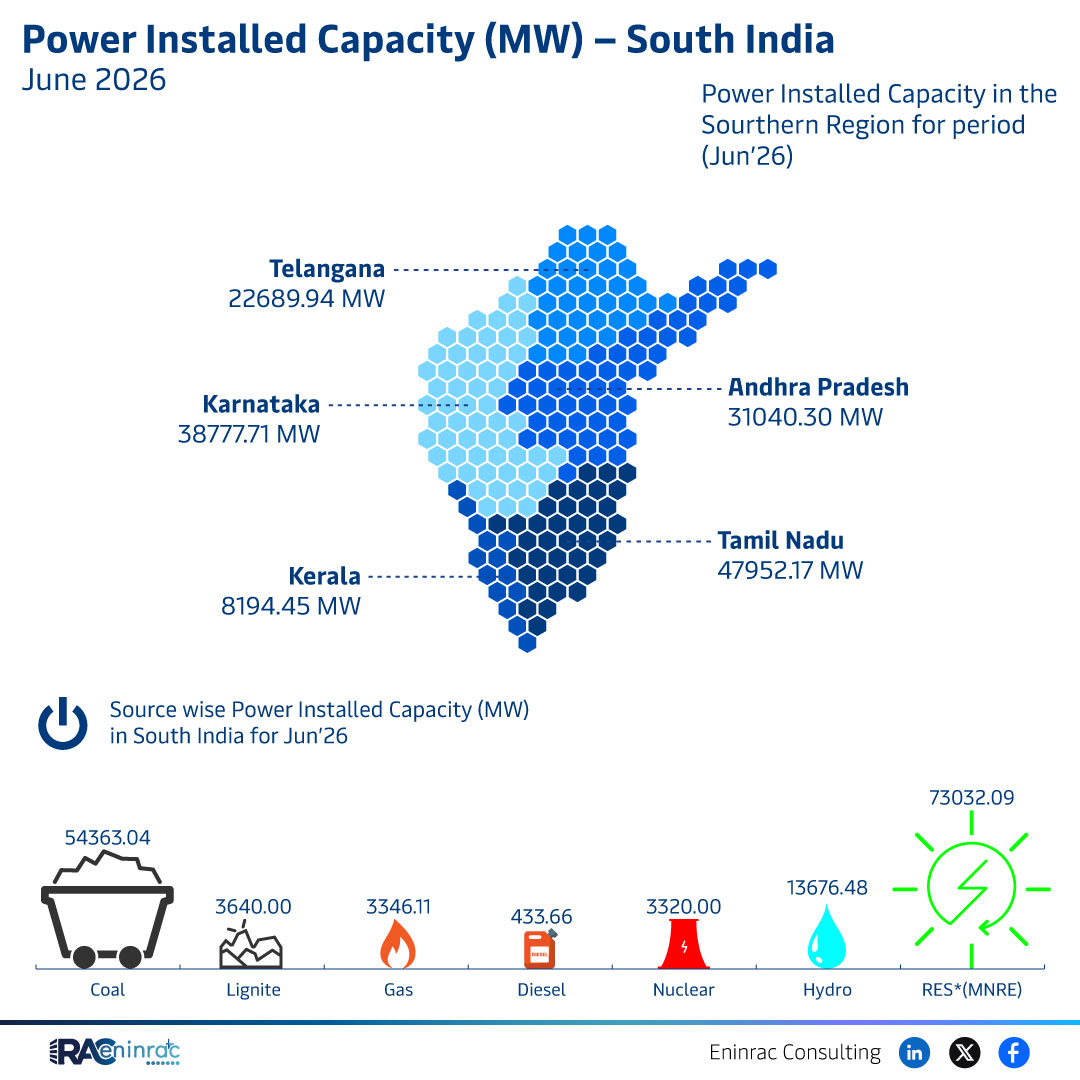
The South India power installed capacity June 2026 report provides a detailed snapshot of how much electricity generation capability is available across the southern states. Understanding this capacity is crucial for investors, policymakers, and industry analysts who track growth trends, plan infrastructure upgrades, and assess the balance between fossil‑fuel and renewable sources. In this article you will learn the total megawatt figures, statewise breakdowns for Telangana, Andhra Pradesh and Tamil Nadu, the mix of generation technologies, and the broader implications for the region’s energy landscape.
What Does the Data Reveal About This Topic?
The data shows that the combined installed capacity in South India for June 2026 exceeds 54,000 MW, with Andhra Pradesh contributing roughly 31,040 MW, Telangana about 22,690 MW, and Tamil Nadu adding around 47,952 MW of mixed‑source capacity. This raises the question: Which state leads in overall capacity and how does the fuel mix differ among them? The answer highlights Tamil Nadu’s large installed base driven by both thermal and renewable projects, while Telangana’s capacity is dominated by gas and diesel plants, and Andhra Pradesh shows a balanced portfolio including significant renewable output.
Statewise Capacity Comparison
When comparing the three major states, Tamil Nadu stands out with nearly 48,000 MW, reflecting strong investments in coal, gas, and expanding solar farms. Andhra Pradesh follows with just over 31,000 MW, where recent lignite and gas projects have boosted its numbers. Telangana, though smaller at about 22,690 MW, demonstrates a high proportion of gas‑fired and diesel generators that support peak‑load requirements. The source‑wise breakdown for the region includes lignite, gas, diesel, and a modest share of nuclear capacity, indicating a transitional phase toward cleaner energy while maintaining reliability.
Impact on Sectors and Industries
The installed capacity figures directly influence multiple sectors. Power‑intensive industries such as steel, aluminum, and cement rely on stable supply; the high capacity in Tamil Nadu offers confidence for new manufacturing hubs. Renewable energy developers see Andhra Pradesh’s balanced mix as an opportunity to add solar and wind projects that complement existing thermal plants. Financial institutions use these capacity numbers to assess credit risk for infrastructure loans, while policymakers evaluate the need for transmission upgrades to move electricity from surplus regions to deficit areas. Consumers benefit from potentially lower tariffs as capacity expands and competition increases.
Key Takeaways
- South India’s total installed capacity in June 2026 exceeds 54,000 MW.
- Tamil Nadu leads with the highest capacity at roughly 48,000 MW.
- Andhra Pradesh provides a balanced mix of thermal and renewable sources.
- Telangana’s capacity is heavily weighted toward gas and diesel generation.
- Source‑wise mix includes lignite, gas, diesel, and limited nuclear.
- Capacity growth supports industrial expansion and attracts renewable investments.
FAQs
What is the total installed power capacity in South India for June 2026?
The combined capacity across the southern states is about 54,363 MW, reflecting contributions from thermal, gas, diesel, and limited nuclear sources.
Which southern state has the highest power capacity?
Tamil Nadu leads with approximately 47,952 MW of installed capacity, driven by both conventional and renewable projects.
How does the fuel mix differ between Telangana and Andhra Pradesh?
Telangana relies heavily on gas and diesel plants, while Andhra Pradesh maintains a more diversified mix with significant lignite and growing renewable capacity.
Are renewable sources a major part of the June 2026 capacity?
Renewables contribute a growing share, especially in Andhra Pradesh and Tamil Nadu, but thermal and gas‑based generation still dominate the overall mix.
What implications does this capacity data have for investors?
Higher installed capacity signals robust demand and opportunities for financing new projects, especially in renewable expansion and transmission network upgrades.