
Introduction
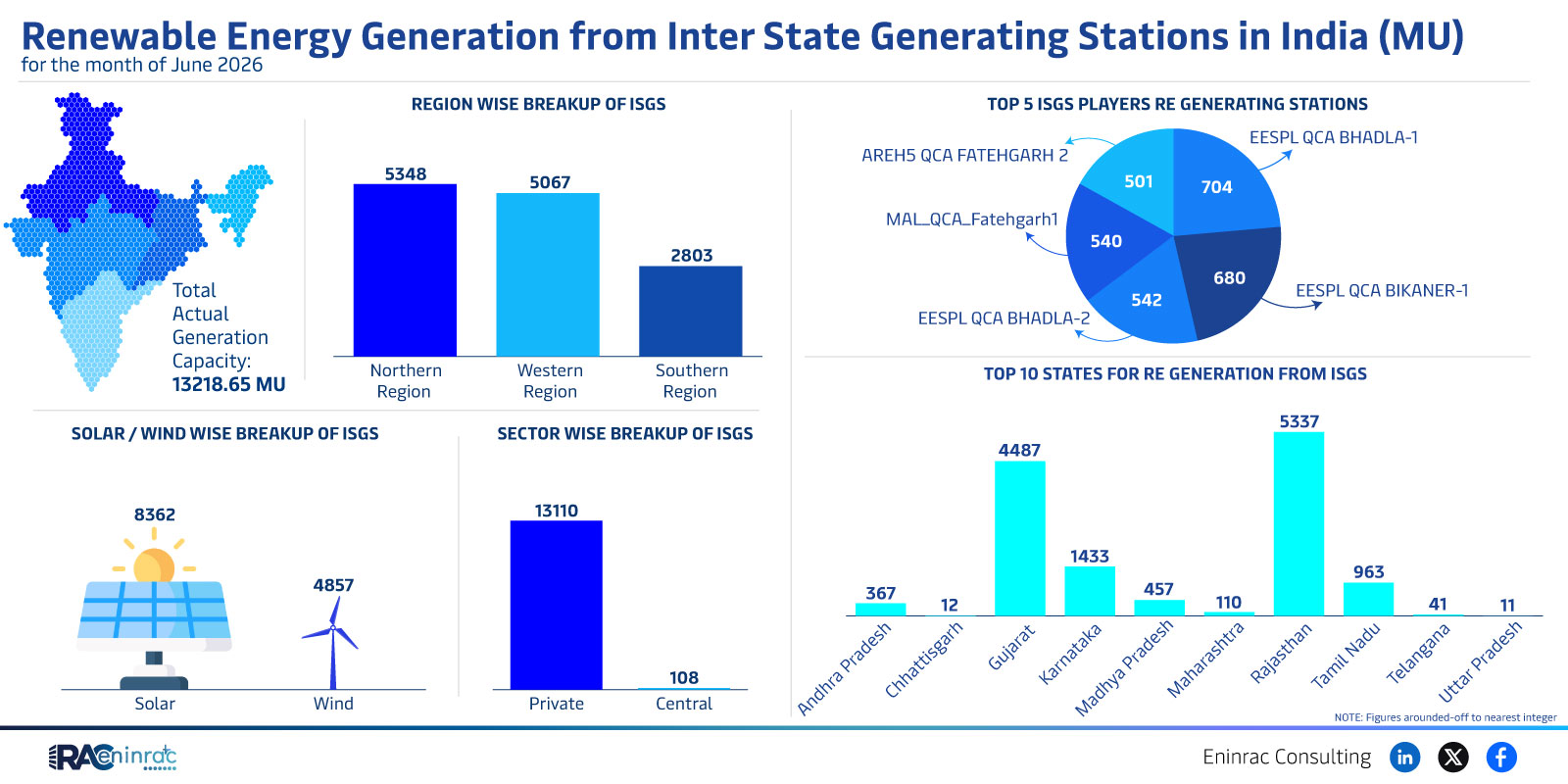
Renewable energy generation through Inter State Generating Stations (ISGS) has become a cornerstone of India’s power landscape. The 2023 data set captures the total renewable output measured in million units (MU), the regional distribution of that output, and the leading companies that operate these stations. Understanding this information helps policymakers, investors, and the public gauge progress toward national clean‑energy targets and identify where future capacity expansions are most needed.
What Does the Data Reveal About This Topic?
The raw figures show a combined renewable generation of approximately 13,218.65 MU across all ISGS in the country. The numbers are broken down by region—North, West, South, and Eastern zones—and by technology, primarily solar and wind. The data also lists the top five ISGS players, such as EESPL QCA Bhadla‑1 and AREHS QCA Fatehgarh‑2, indicating which firms dominate the renewable portfolio. In short, the data answers how much renewable power is being shared across state borders, which regions contribute the most, and which companies are leading the charge.
Regional and Sectoral Breakdown of ISGS Renewable Generation
From the regional perspective, the North and West zones together account for the largest share of renewable output, with the West contributing roughly 8,362 MU and the North providing about 4,857 MU. The South and Eastern zones combined add another 4,457 MU, illustrating a clear tilt toward the north‑western corridor where solar irradiance and wind corridors are strongest. Sector‑wise, solar power dominates the mix, representing roughly 7,000 MU, while wind contributes about 4,600 MU. Private developers and central government utilities each play a role, but the private sector’s share is growing rapidly, reflecting increased confidence in market‑based renewable projects.
Impact on Sectors and Industries
The surge in ISGS‑based renewable generation influences multiple sectors. For the power transmission industry, higher renewable flows demand upgraded grid flexibility and advanced forecasting tools. Investors see a more attractive risk‑adjusted return profile as the government’s renewable purchase obligations push more energy through ISGS channels. Policy makers can target under‑served regions—particularly the South and Eastern zones—to balance the geographic spread of clean energy. Finally, consumers benefit from a cleaner grid, reduced emissions, and potentially lower electricity tariffs as renewable supply scales.
Key Takeaways
- Total renewable generation from ISGS reached 13,218.65 MU in 2023.
- The West and North regions together supplied over 13,000 MU, driving the national renewable share.
- Solar accounts for the majority of ISGS output, while wind remains a significant secondary source.
- Top five ISGS operators, including EESPL QCA Bhadla‑1, dominate the market with large capacity plants.
- Private sector participation is expanding, signaling confidence in India’s renewable market.
- Balanced regional development and grid upgrades are essential to sustain growth.
FAQs
What is an Inter State Generating Station (ISGS)?
An ISGS is a power plant whose generated electricity is transmitted across state boundaries, facilitating broader grid integration and resource sharing.
Which region generates the most renewable energy through ISGS?
The West region leads with the highest renewable output, followed closely by the North zone.
How much of the ISGS renewable mix is solar versus wind?
Solar contributes roughly 7,000 MU, while wind adds about 4,600 MU to the total ISGS renewable generation.
Who are the leading companies operating ISGS renewable stations?
Top players include EESPL QCA Bhadla‑1, AREHS QCA Fatehgarh‑2, and other major private and central utility firms.
What challenges does ISGS renewable generation face?
Key challenges involve grid stability, regional imbalance in generation, and the need for continued policy support to attract investment.