
Introduction
The SECI tender auction for the 1000 MW FDRE RTC‑TM project in India has attracted several renewable energy developers, delivering competitive bids and reshaping the market landscape. This article breaks down the auction results, identifies the winning bidder, examines the participation of key firms such as Purvah Green Power, EMIF II Holding, and Juniper Green Energy, and explains what these outcomes mean for investors, policymakers, and the broader clean‑energy transition.
What Does the Data Reveal About This Topic?
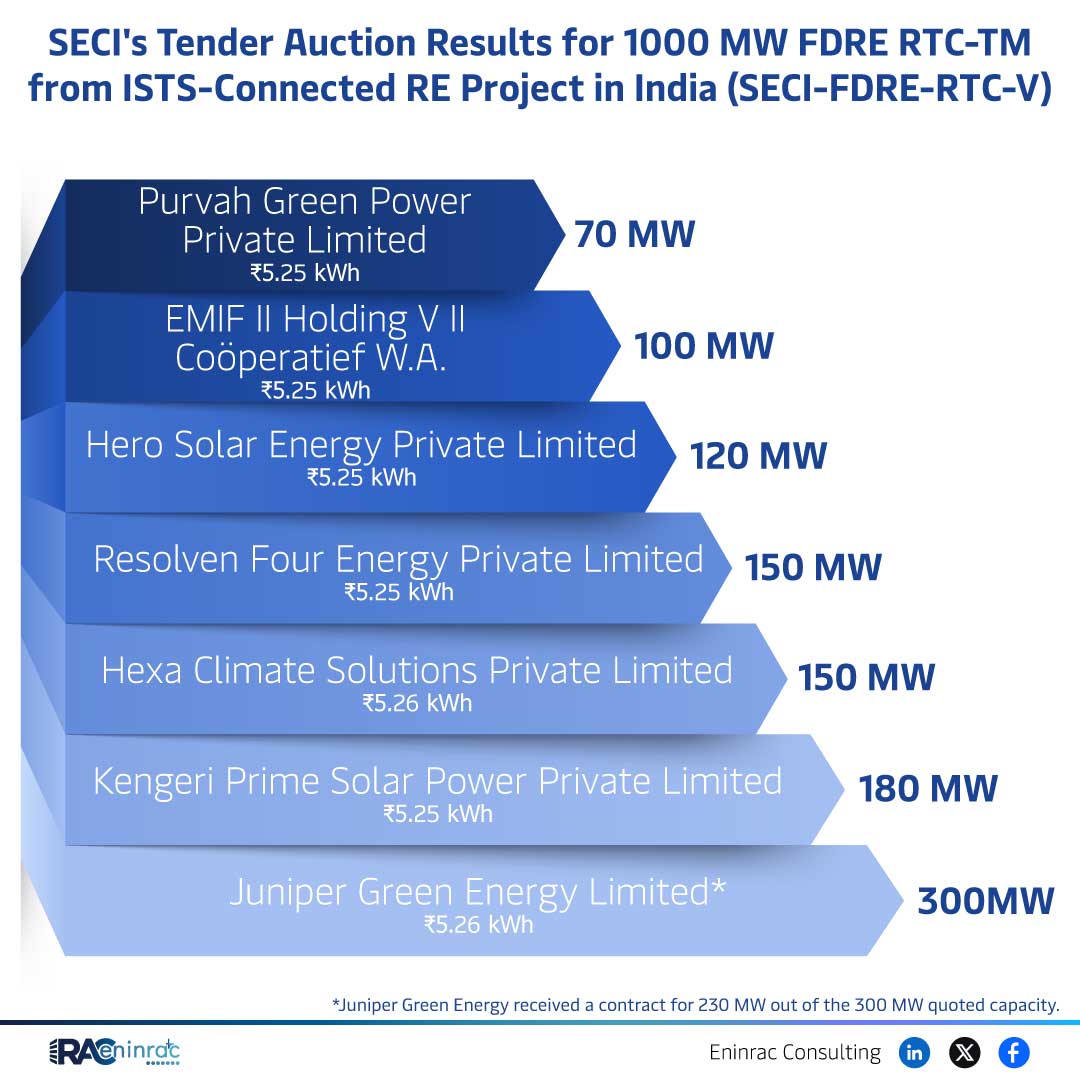
The data shows that Juniper Green Energy secured a contract for 230 MW out of the 300 MW capacity it quoted, becoming the largest award in this round. Meanwhile Purvah Green Power submitted a 5.25 kWh bid and EMIF II Holding offered 35.25 kWh, indicating a diverse range of bid sizes and strategic approaches among participants. The overall allocation underscores SECI’s focus on sizable, utility‑scale projects while still accommodating smaller players.
Company Highlights and Award Distribution
Among the listed bidders, Juniper Green Energy’s 230 MW award represents roughly 77 % of the quoted 300 MW capacity, illustrating its strong competitive position. In contrast, Purvah Green Power’s 5.25 kWh bid and EMIF II Holding’s 35.25 kWh offer are orders of magnitude smaller, reflecting niche or pilot‑scale interests. The presence of entities like Cooperatif W.A. further highlights international interest, while the mixed scale of bids suggests a market that balances large‑scale generation with experimental or micro‑generation projects.
Impact on Sectors and Industries
These tender results have immediate implications for the Indian renewable energy sector. By awarding a substantial 230 MW to Juniper, SECI signals confidence in large‑scale solar or wind installations, likely spurring additional private investment and accelerating grid integration efforts. Smaller bids indicate ongoing opportunities for distributed generation, which can enhance energy access in remote areas and support policy goals around decentralization and emissions reduction.
Key Takeaways
- Juniper Green Energy secured the largest award of 230 MW.
- The award covers 77 % of the quoted 300 MW capacity.
- Purvah Green Power and EMIF II Holding participated with much smaller bids.
- The tender reflects SECI’s strategy to prioritize utility‑scale projects.
- International players like Cooperatif W.A. show global interest.
- The mix of bid sizes suggests growth potential for both large and micro renewable projects.
FAQs
What is the SECI FDRE RTC‑TM tender?
It is a government‑run auction that offers a 1000 MW renewable energy portfolio under the FDRE RTC‑TM scheme to qualified developers.
Which company won the biggest contract?
Juniper Green Energy received the largest contract, being awarded 230 MW.
How much capacity did Juniper Green Energy receive?
Juniper was allocated 230 MW out of the 300 MW it had quoted.
Why are there very small kWh bids in the auction?
Smaller kWh bids often represent pilot, research or niche projects that aim to demonstrate new technologies or serve specific local needs.
What does this tender mean for future renewable investments in India?
The results encourage further large‑scale investment, show confidence in the market, and maintain space for smaller, innovative projects, supporting overall clean‑energy goals.