
Introduction
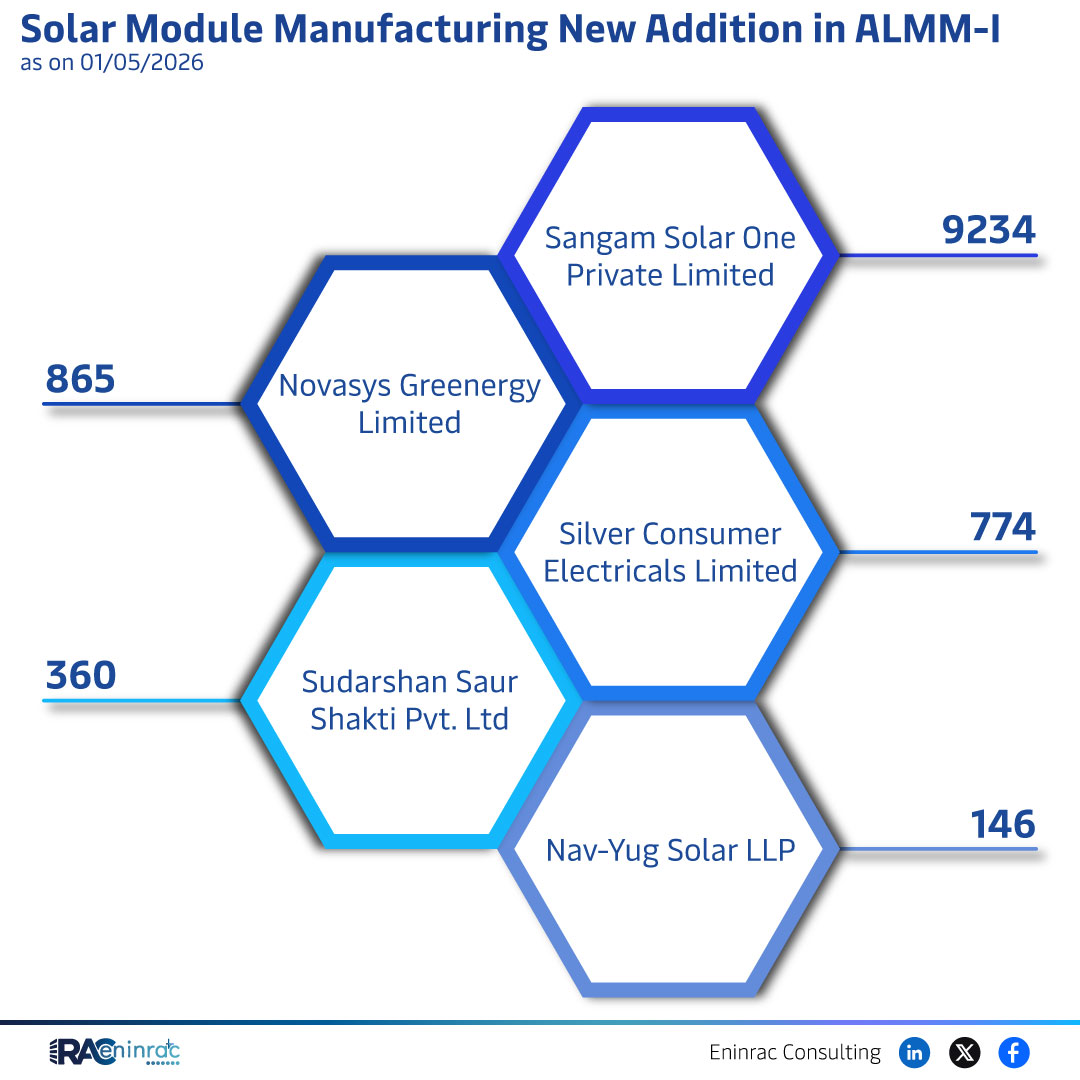
The latest ALMM-I (Annual List of Manufacturing Modules – India) release dated 01/05/2026 shows a fresh set of companies entering solar module manufacturing. This addition highlights the growing momentum of domestic solar production, the diversification of players, and the strategic importance of expanding capacity to meet India’s renewable energy targets. Readers will discover which firms have joined the list, what this signals for the industry, and how it may affect investors and policymakers.
What Does the Data Reveal About This Topic?
Which new entities are now listed as solar module manufacturers in ALMM‑I 2026? The data introduces seven new names: Sangam Solar One Private Limited, Novasys Greenergy Limited, Silver Consumer Electricals Limited, Sudarshan Saur Shakti Pvt. Ltd, Nav‑Yug Solar LLP, and an ambiguous entry that appears to be a consulting firm. Their inclusion indicates a widening of the manufacturing base beyond traditional large‑scale players, suggesting increased competition and potential price reductions.
Emerging Players and Their Market Position
Comparing the newcomers reveals varied backgrounds. Sangam Solar One and Nav‑Yug Solar are pure‑play solar firms, likely focusing on thin‑film or crystalline silicon modules. Novasys Greenergy and Silver Consumer Electricals bring experience from broader renewable or electrical sectors, which may accelerate technology transfer and supply chain integration. Sudarshan Saur Shakti, with a name hinting at a regional focus, could target niche markets or rural electrification projects. The presence of a consulting entity suggests advisory services are becoming integral to manufacturing scale‑up.
Impact on Sectors and Industries
The expansion of solar module manufacturers influences several sectors. For the renewable energy market, increased domestic output reduces reliance on imports, improves trade balance, and supports the government’s 450 GW solar target by 2030. Investors gain new opportunities in equity and debt financing of emerging firms. Policymakers can leverage this growth to refine incentives, such as accelerated depreciation and subsidy schemes, while ensuring quality standards. Consumers benefit from potentially lower module costs and greater availability of locally‑sourced products.
Key Takeaways
- Seven new companies are listed in ALMM‑I 2026, expanding India’s solar module manufacturing base.
- Entries include pure‑play solar firms and diversified electrical or renewable businesses.
- Domestic production growth supports national renewable energy goals and reduces import dependence.
- Increased competition may drive down module prices and improve technology adoption.
- Investors have fresh avenues for funding early‑stage solar manufacturers.
- Policymakers can refine incentives to sustain quality and scale in the sector.
FAQs
What is ALMM‑I?
ALMM‑I is the Annual List of Manufacturing Modules – India, a government‑maintained register of companies authorized to produce solar modules domestically.
Why does the addition of new manufacturers matter?
More manufacturers increase capacity, create competition, lower prices, and help achieve renewable energy targets faster.
Are these new firms focused on a specific solar technology?
While detailed technology data is not provided, the mix of pure‑play and diversified firms suggests a blend of crystalline silicon, thin‑film, and possibly emerging technologies.
How can investors participate?
Investors can explore equity stakes, venture funding, or green bonds aimed at scaling up these emerging manufacturers.
What role does the government play?
The government offers incentives, quality certifications, and policy frameworks that encourage domestic manufacturing and ensure compliance with international standards.