
Introduction
South India EV charging electricity consumption for the fiscal year 2025‑26 provides a clear snapshot of how electric vehicle charging stations are drawing power across the region. The data, compiled from major distribution utilities, shows the total megawatt‑hours (MU) used by EV PCS, separating regular charging from heavy‑duty demand. Understanding this consumption pattern is essential for policymakers, utilities, investors and businesses that are planning infrastructure upgrades, renewable integration and cost‑recovery mechanisms. This article unpacks the numbers, highlights leading states and utilities, and discusses the broader implications for the emerging EV ecosystem.
What Does the Data Reveal About This Topic?
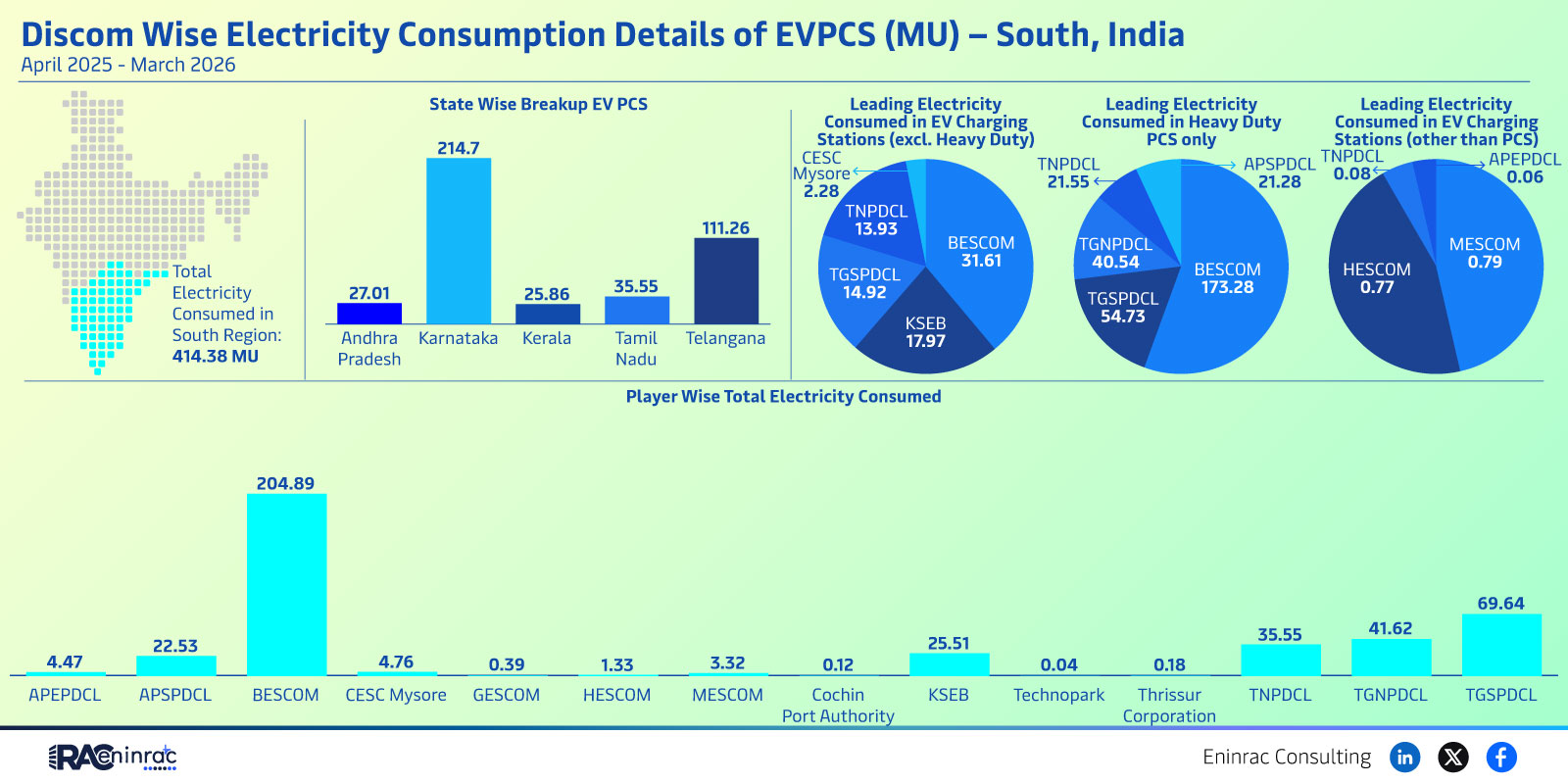
What does the data reveal about South India EV charging electricity consumption? The numbers indicate that total consumption reached approximately 2147 MU, with the majority coming from regular charging and a smaller share allocated to heavy‑duty vehicles. State‑level breakdown shows Andhra Pradesh, Karnataka, Kerala, Tamil Nadu and Telangana each contributed distinct volumes, while utility‑level totals highlight TNPDCL, APEPDCL, APSPDCL and others as primary suppliers. The figure also suggests a modest growth in heavy‑duty charging relative to previous periods.
Statewise Comparison of EV PCS Electricity Use
When comparing the five southern states, Tamil Nadu leads with the highest consumption at 414.38 MU, followed closely by Karnataka and Andhra Pradesh at 204.89 MU and 41.62 MU respectively. Kerala records a modest 22.53 MU, while Telangana’s share sits at 35.55 MU. At the utility level, TNPDCL reports the largest share (21.55 MU), with APEPDCL and APSPDCL contributing 21.28 MU and 0.08 MU respectively. Smaller utilities such as BESCOM, CESC and MESCOM together account for less than one MU, indicating a concentrated demand among a few major distributors.
Impact on Sectors and Industries
The consumption patterns highlighted in the data have direct ramifications for several sectors. Power distributors must plan capacity upgrades and manage load balancing to accommodate growing EV charging demand. Renewable energy developers see a clear opportunity to link solar and wind assets with charging infrastructure, especially in high‑consumption states like Tamil Nadu. Automotive manufacturers and fleet operators can use the regional usage insights to optimize charging network placement and pricing strategies. Policymakers can design targeted incentives and grid support measures that reflect the varying demand across states and utility territories.
Key Takeaways
- Total South India EV charging electricity consumption reached roughly 2147 MU in FY 2025‑26.
- Tamil Nadu was the top consumer, accounting for over 400 MU of demand.
- TNPDCL emerged as the leading utility, supplying more than 21 MU to chargers.
- Heavy‑duty vehicle charging remains a small but growing portion of total use.
- State‑level differences highlight where infrastructure investment and renewable integration are most needed.
- Data underscores the importance of coordinated policy to manage rising EV power requirements.
FAQs
What is the total electricity consumption by EV charging stations in South India for FY 2025‑26?
The aggregated consumption was about 2147 megawatt‑hours, combining regular and heavy‑duty vehicle charging across all five southern states.
Which state consumed the most electricity for EV charging?
Tamil Nadu led the region with approximately 414.38 MU, far exceeding the consumption levels of Karnataka, Andhra Pradesh, Kerala and Telangana.
How do the major utilities compare in supplying power to EV chargers?
TNPDCL supplied the largest volume at 21.55 MU, followed closely by APEPDCL and APSPDCL, while smaller distributors each contributed less than one MU.
Is heavy‑duty EV charging a significant part of the total demand?
Heavy‑duty charging accounted for a modest share of the total, indicating early‑stage adoption but a potential rise as commercial fleets electrify.
What implications does this data have for future infrastructure planning?
The figures suggest targeted grid upgrades, renewable‑energy pairing, and policy incentives are needed, especially in high‑consumption states, to sustain EV market growth.