
Introduction
The March 2026 report on South India EV charging electricity consumption provides a clear snapshot of how electric vehicle (EV) charging stations are drawing power across the southern states. With EV adoption accelerating, understanding where electricity is used helps policymakers, utilities, investors and consumers make informed decisions about infrastructure, pricing and sustainability.
What Does the Data Reveal About This Topic?
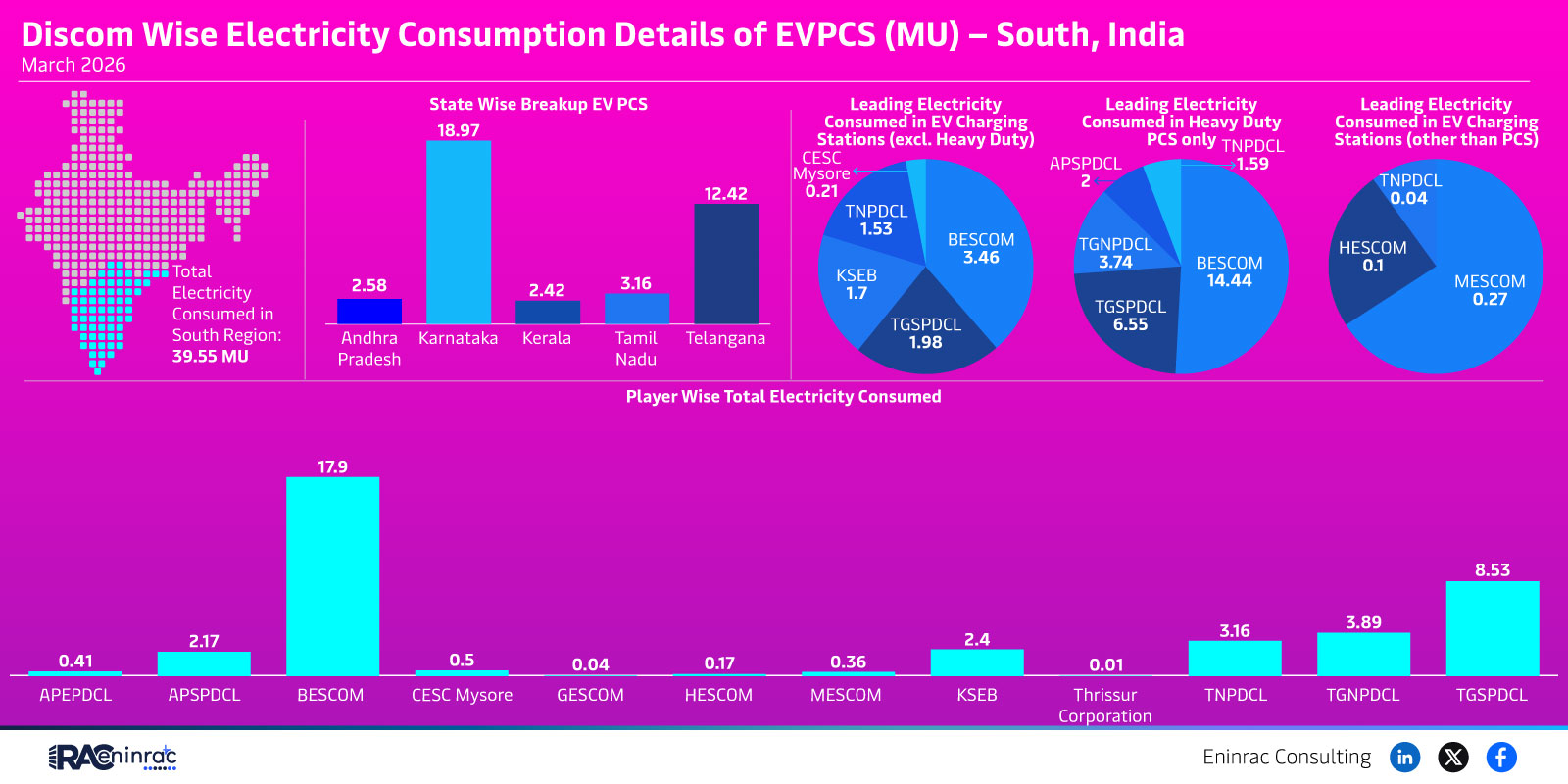
The data shows that the southern region consumed a total of 39.55 million units (MU) of electricity for EV charging in March 2026. Karnataka and Tamil Nadu emerge as the leading discoms, accounting for the highest share of consumption, while smaller states like Kerala and Telangana contribute modest amounts. This distribution highlights regional disparities in EV charging infrastructure and usage patterns.
State‑wise Discom Performance in March 2026
When broken down by discom, APEPDCL (Andhra Pradesh) and APSPDCL together contributed a significant portion of the total, reflecting the growing EV fleet in the state. BESCOM in Karnataka recorded the largest single‑discom consumption, followed closely by CESC Mysore and KSEB in Kerala. Tamil Nadu’s TNPDCL showed rapid growth, indicating increased deployment of public charging points. Meanwhile, smaller utilities such as GESCOM and HESCOM reported lower usage, suggesting either fewer charging stations or slower EV adoption in those areas.
Impact on Sectors and Industries
The rise in South India EV charging electricity consumption influences several sectors. Utilities must plan for higher peak loads and invest in grid upgrades to avoid outages. Renewable energy developers see an opportunity to supply clean power for charging stations, aligning with India’s decarbonisation goals. Automotive manufacturers benefit from visible demand for EVs, encouraging new model launches and battery technology improvements. Investors can assess market potential based on regional consumption trends, while policymakers can design incentives targeted at lagging states to balance the ecosystem.
Key Takeaways
- The southern region consumed 39.55 MU of electricity for EV charging in March 2026.
- Karnataka and Tamil Nadu lead the consumption, reflecting robust charging infrastructure.
- Andhra Pradesh’s discoms (APEPDCL, APSPDCL) together hold a major share of the total.
- Smaller states like Kerala and Telangana show lower consumption, indicating growth opportunities.
- Higher electricity demand signals the need for grid reinforcement and renewable integration.
- Stakeholders can use this data to shape investment, policy and infrastructure strategies.
FAQs
What is the total electricity consumption for EV charging in South India for March 2026?
The region used 39.55 MU of electricity for EV charging during that month.
Which states have the highest EV charging electricity usage?
Karnataka and Tamil Nadu recorded the highest consumption among the southern states.
How does this consumption affect the power grid?
The increased load requires utilities to upgrade distribution networks and consider more renewable sources to meet demand.
Why is Andhra Pradesh’s consumption significant?
APEPDCL and APSPDCL together contribute a large share, indicating a fast‑growing EV market in the state.
What opportunities does this data present for investors?
Investors can target regions with rapid growth, such as Karnataka, or support infrastructure development in lower‑consumption states.