
Introduction
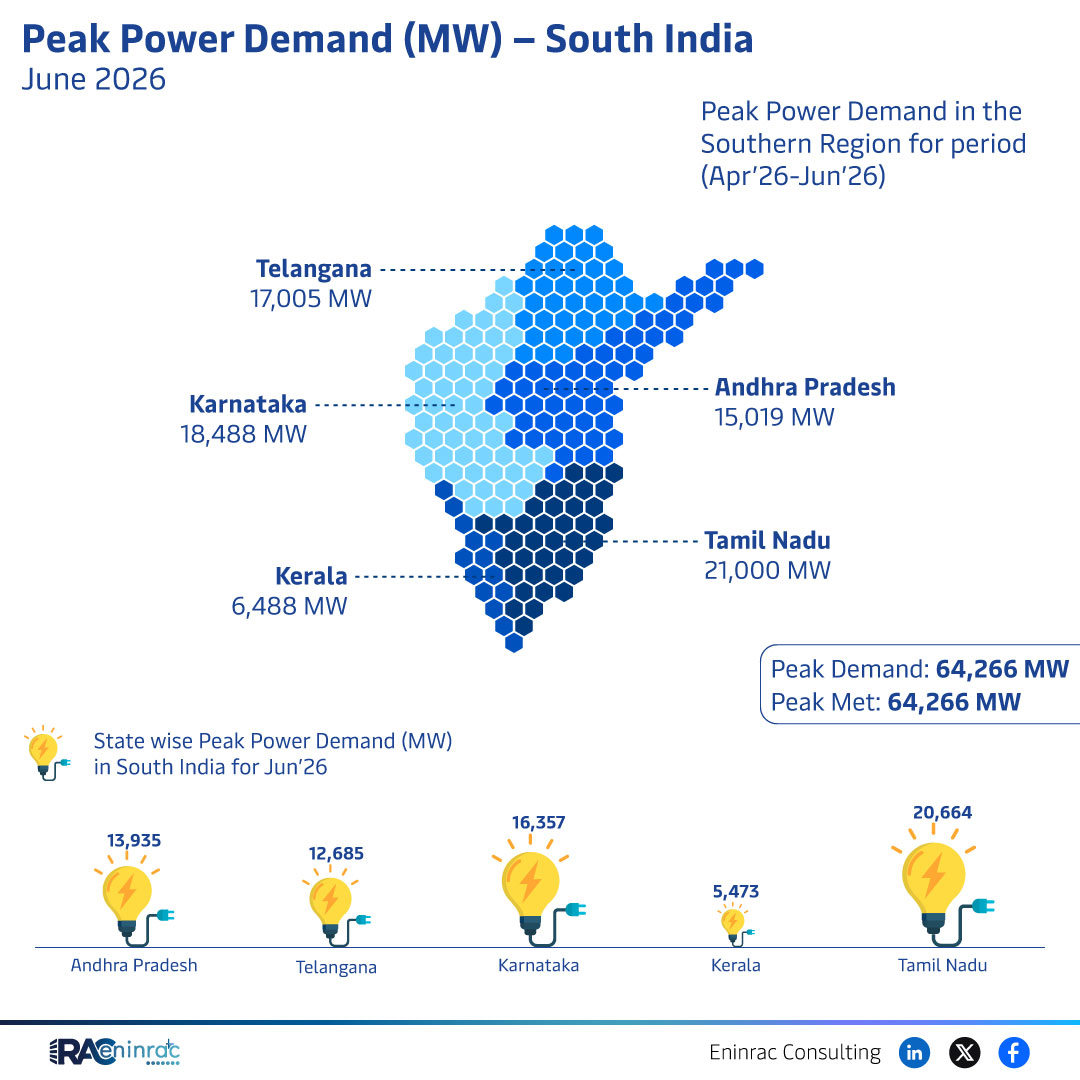
The Southern region of India recorded a historic peak power demand in June 2026. With a total of 64,266 MW across five major states, the grid faced unprecedented stress. Understanding the South India peak power demand June 2026 figures is essential for utilities, policymakers, investors, and anyone tracking the country’s energy landscape. This article breaks down the statewise numbers, highlights key trends, and discusses the broader implications for the power sector.
What Does the Data Reveal About This Topic?
Why did South India’s electricity load surge to 64,266 MW in June 2026? The data shows that a combination of rising industrial activity, extreme summer temperatures, and increased residential consumption drove the surge. Each state contributed differently, with Kerala posting the highest individual demand at 21,000 MW, followed closely by Karnataka and Telangana. The figures suggest that regional load‑growth patterns are diverging, emphasizing the need for targeted grid reinforcement.
Statewise Comparison of Peak Power Demand
When the six states are examined side by side, clear leadership and lagging patterns emerge. Kerala leads with 21,000 MW, reflecting its dense industrial base and high per‑capita consumption. Karnataka follows at 18,488 MW, driven by technology hubs and manufacturing clusters. Telangana recorded 17,005 MW, benefiting from rapid urbanization. Andhra Pradesh contributed roughly 15,019 MW, while Tamil Nadu’s demand stood at 6,488 MW, indicating lower peak usage in that period. Together these figures sum to the observed 64,266 MW regional peak.
Impact on Sectors and Industries
The elevated demand influences multiple stakeholders. Power generation companies must accelerate capacity additions and adopt flexible generation assets to meet peak loads. Transmission operators face higher stress on inter‑state corridors, prompting upgrades to avoid bottlenecks. Industrial users, particularly in Kerala and Karnataka, need robust backup solutions to mitigate outage risks. Policymakers are urged to strengthen demand‑side management programs, promote energy efficiency, and incentivize renewable integration to balance the load.
Key Takeaways
- South India’s total peak demand reached 64,266 MW in June 2026.
- Kerala was the leading state with 21,000 MW, the highest among the region.
- Karnataka and Telangana posted significant peaks of 18,488 MW and 17,005 MW respectively.
- Andhra Pradesh contributed around 15,019 MW while Tamil Nadu recorded 6,488 MW.
- Extreme summer temperatures and industrial expansion were primary drivers.
- Grid operators must prioritize transmission upgrades and flexible generation to handle future peaks.
FAQs
What caused the peak demand to hit 64,266 MW in June 2026?
Rapid industrial growth, high summer temperatures, and increased household electricity use combined to push the load to a record level.
Which state had the highest peak power demand?
Kerala recorded the highest demand at 21,000 MW.
How does Karnataka’s demand compare to Telangana’s?
Karnataka’s peak of 18,488 MW slightly exceeds Telangana’s 17,005 MW.
What challenges do transmission operators face with this peak?
They must manage higher line loading, prevent congestion, and invest in corridor upgrades to maintain reliability.
How can policymakers reduce future peak loads?
Through demand‑side management, energy‑efficiency incentives, and greater integration of renewable energy sources.