
Introduction
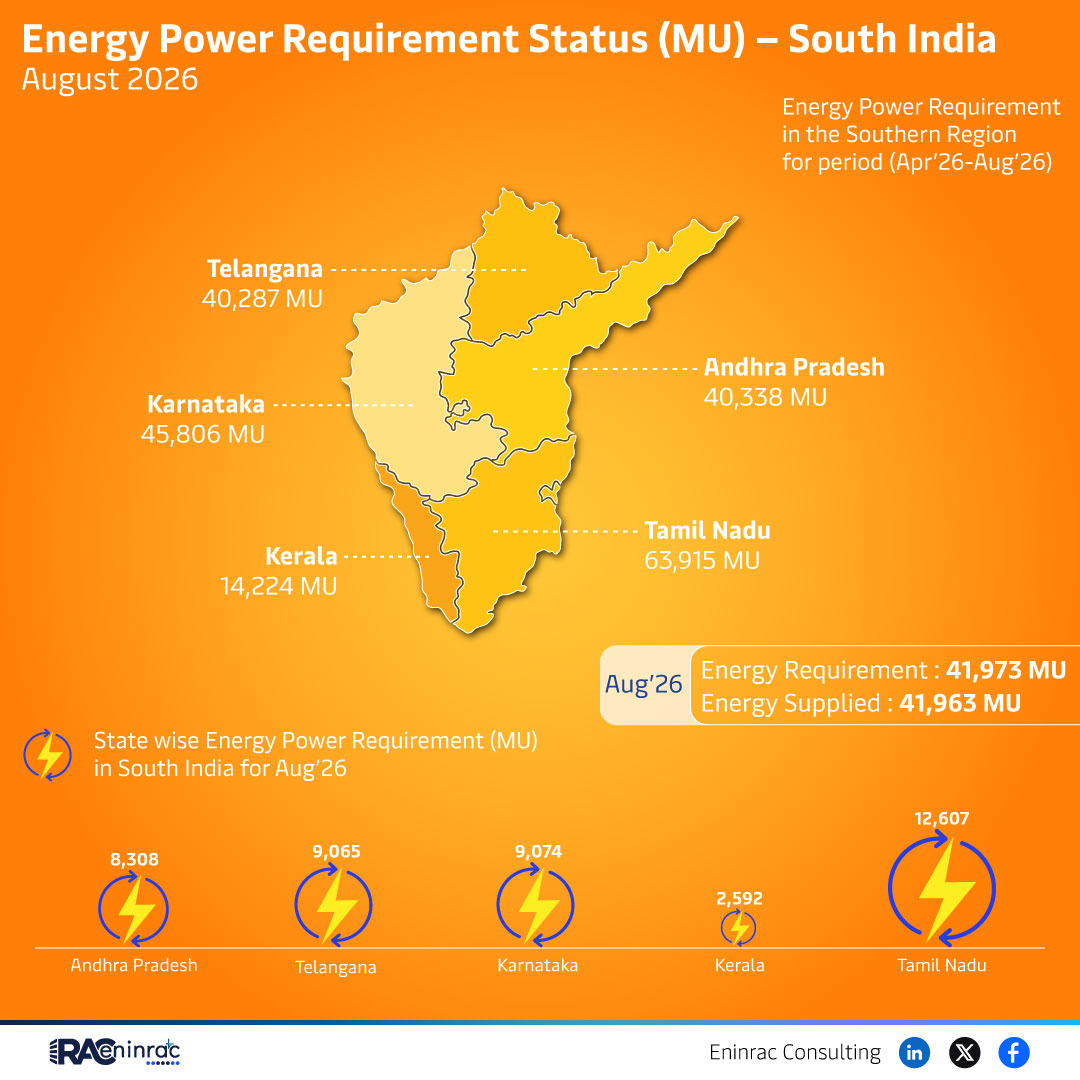
Understanding power demand in South India during August 2026 is essential for grid operators, policymakers, and investors. The region’s energy landscape includes five major states—Andhra Pradesh, Telangana, Karnataka, Kerala, and Tamil Nadu—each contributing to the overall requirement. The raw data reveals a total energy requirement of 41,973 million units (MU) and a closely matched supply of 41,963 MU, indicating near‑balance. This article interprets the state‑wise figures, highlights leading demand centers, and discusses implications for the electricity market. Readers will learn how the numbers compare across states, what factors drive the demand, and which sectors are most affected by this balance.
What Does the Data Reveal About This Topic?
What does the August 2026 data tell us about South India’s power requirement? The figures show a total regional requirement of 41,973 MU, almost fully met by a supply of 41,963 MU, suggesting effective short‑term planning. Telangana, Andhra Pradesh, Karnataka and Kerala emerge as the highest demand contributors, while Tamil Nadu shows a comparatively lower figure. The near‑parity between requirement and supply points to a well‑balanced grid for the month, but regional variations still demand targeted management.
State‑wise Power Requirements in South India for August 2026
The state‑wise breakdown reveals distinct demand patterns. Telangana records a requirement of 40,287 MU, placing it among the top consumers. Andhra Pradesh follows closely with 45,806 MU, the highest among the listed states. Karnataka’s demand stands at 40,338 MU, almost identical to Telangana’s level. Kerala reports a lower requirement of 14,224 MU, reflecting its smaller industrial base. Additional numbers for August 2026 show Andhra Pradesh at 12,607 MU, Telangana at 8,308 MU, Karnataka at 9,065 MU, Kerala at 9,074 MU, and Tamil Nadu with a modest demand figure, highlighting the diverse consumption levels across the southern region.
Impact on Sectors and Industries
The August 2026 power requirement data influences several sectors. Generation companies must align capacity with the near‑balanced demand‑supply scenario to avoid over‑generation. Distribution networks face the task of delivering electricity efficiently to high‑demand states like Andhra Pradesh and Karnataka, while ensuring reliability in lower‑demand areas such as Kerala. Industrial users, particularly in manufacturing hubs, will monitor these figures to plan production schedules. Investors and policymakers can use the data to assess grid stability, plan future infrastructure upgrades, and design demand‑side management programs.
Key Takeaways
- Total South India requirement in August 2026 is 41,973 MU.
- Supply closely matches demand at 41,963 MU.
- Andhra Pradesh leads with the highest state demand.
- Telangana and Karnataka show almost equal high demand.
- Kerala records significantly lower consumption.
- Balanced figures indicate effective short‑term grid management.
FAQs
What was the total power requirement for South India in August 2026?
The region required 41,973 million units (MU) of electricity.
Did the power supply meet the August 2026 demand?
Yes, supply reached 41,963 MU, virtually covering the requirement.
Which state had the highest electricity demand?
Andhra Pradesh recorded the highest demand at 45,806 MU.
How does Kerala’s demand compare to other states?
Kerala’s demand of 14,224 MU is considerably lower than the major consuming states.
What implications does the balanced demand‑supply have for investors?
The near‑balance suggests grid stability, encouraging confidence in short‑term energy investments.