
Introduction
The renewable power installed capacity South India data for August 2026 offers a clear snapshot of how each southern state is advancing its clean‑energy portfolio. Telangana, Karnataka, Tamil Nadu and Kerala together contribute a multi‑gigawatt mix of solar, wind, bio‑power and hydro resources. Understanding these figures helps investors, policymakers and industry analysts gauge regional momentum, identify growth hotspots and align future projects with emerging demand. This article walks through the latest numbers, highlights key trends and explains why the capacity build‑out matters for the broader Indian energy transition.
What Does the Data Reveal About This Topic?
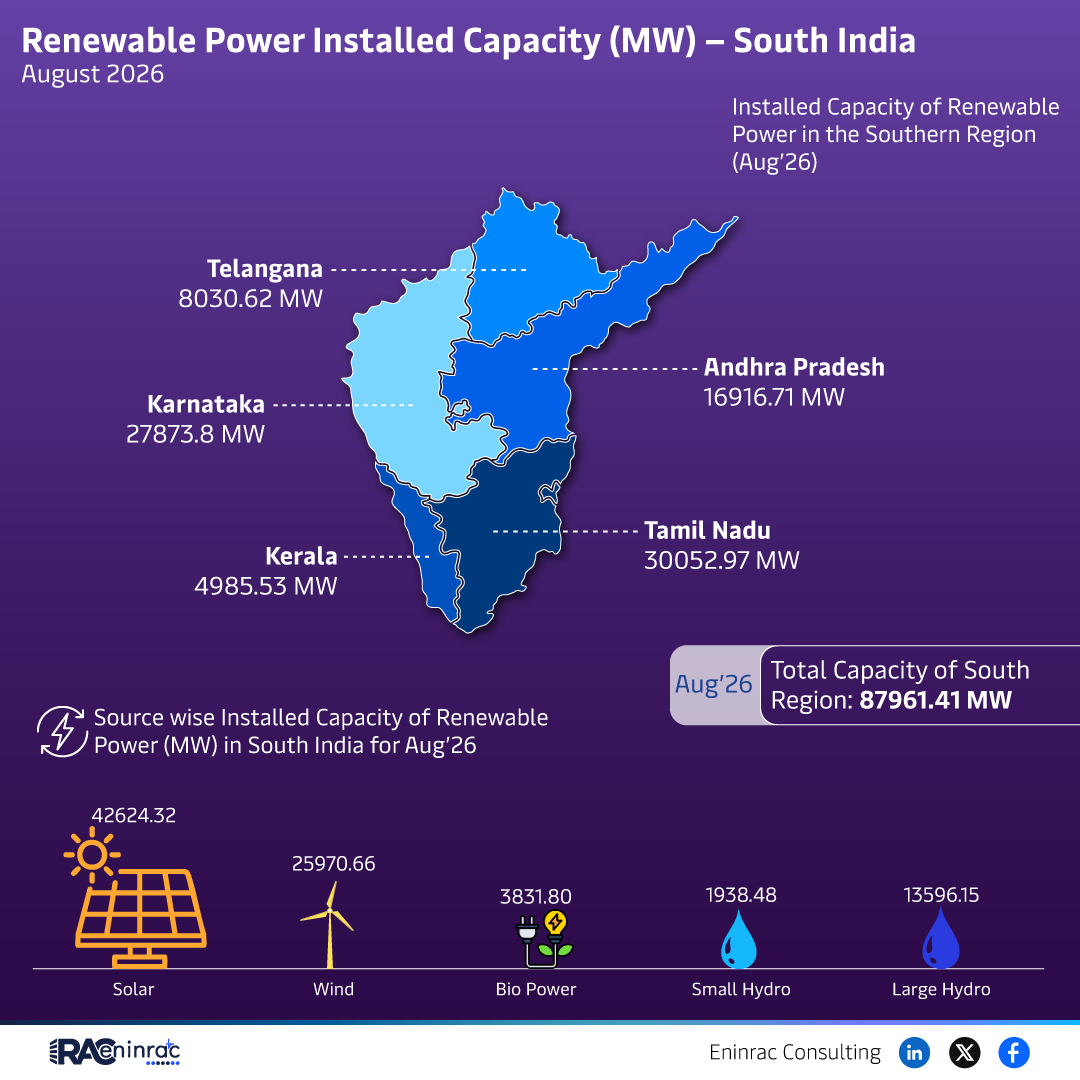
What does the August 2026 dataset tell us about renewable power installed capacity South India? The numbers indicate that Karnataka leads with a total of 27,873.8 MW, followed by Kerala at 30,052.97 MW total installed, while Telangana contributes 8,030.62 MW and Tamil Nadu adds significant yet fragmented capacity. Solar dominates the mix, accounting for more than 25,970 MW, with wind, bio‑power and hydro providing complementary generation. The data confirms a steady shift toward solar‑centric development, while hydro remains a vital stabiliser in the energy mix.
State‑wise Renewable Capacity Comparison
When we compare the four states, Karnataka emerges as the most diversified player, boasting strong solar and wind installations alongside modest bio‑power and hydro contributions. Kerala’s portfolio is heavily weighted toward large hydro and small hydro projects, reflecting its riverine geography. Telangana shows a focused expansion in solar installations, whereas Tamil Nadu, though not clearly detailed in the raw extract, is traditionally a solar and wind hub that complements the regional balance. The comparative view underscores how geography, state policies and grid connectivity shape capacity outcomes.
Impact on Sectors and Industries
The growth of renewable power installed capacity South India influences several sectors. Utilities benefit from reduced reliance on fossil fuels, improving grid resilience and lowering emissions. Manufacturing firms see opportunities in supplying solar panels, wind turbines and bio‑fuel equipment. Financial institutions gain new avenues for green financing and ESG‑aligned investments. Policymakers can target incentives to accelerate under‑served regions, while consumers gradually benefit from cleaner electricity and potential cost reductions as renewable generation scales.
Key Takeaways
- Karnataka leads the southern region with the highest total renewable capacity.
- Solar power accounts for the largest share of installed capacity across all states.
- Kerala’s hydro assets provide essential baseload support for the renewable mix.
- Telangana’s growth is driven primarily by solar installations.
- State‑specific policies shape the diversification of renewable sources.
- Investors can target state‑wise opportunities based on resource availability.
FAQs
Which southern state has the highest renewable capacity?
Karnataka reports the highest total installed renewable capacity at approximately 27,874 MW.
What is the dominant renewable source in South India?
Solar power leads the region, providing more than 25,970 MW of capacity.
How does hydro power contribute to the south’s renewable mix?
Hydro, both small and large, supplies reliable baseload generation, especially in Kerala.
Are there significant bio‑power installations in the south?
Bio‑power contributes a smaller but growing share, complementing solar and wind.
What implications does this data have for investors?
Investors can leverage state‑specific capacity trends to allocate capital toward high‑growth renewable projects.