
Introduction
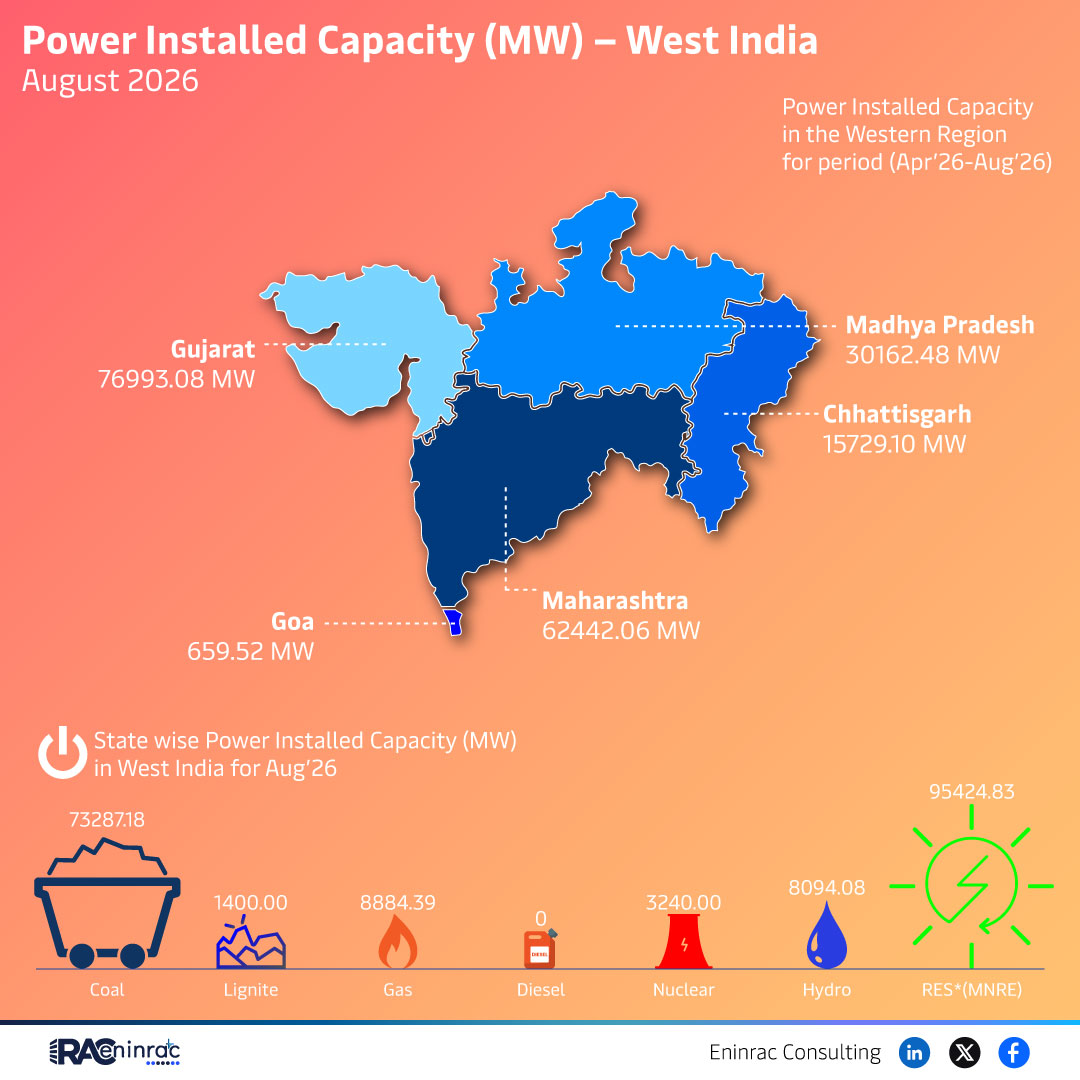
The August 2026 snapshot of power installed capacity across West India offers a clear view of how much electricity generation potential each state holds. Understanding these figures is crucial for investors, policymakers, utilities, and anyone interested in the region’s energy landscape. This article breaks down the latest numbers, explains what they mean for the market, and highlights the most significant trends shaping power generation in Gujarat, Maharashtra, Goa and surrounding areas.
What Does the Data Reveal About This Topic?
The data shows a substantial increase in total installed capacity for the Western Region during the Apr‑26 to Aug‑26 period, driven primarily by large contributions from Gujarat and Goa. Gujarat alone reports two distinct capacity figures—30,162.48 MW and 76,993.08 MW—indicating a mix of conventional and renewable assets. Goa’s 62,442.06 MW underscores its growing role as a hub for both thermal and renewable plants. Together, these states push the Western Region’s overall capacity well beyond national averages.
Statewise Comparison of Installed Capacity in West India
When comparing states, Gujarat leads with the combined 107,155.56 MW, a blend of coal, gas, and renewable sources. Maharashtra, though mentioned without a clear figure, traditionally ranks high in thermal capacity, while Goa’s 62,442.06 MW positions it as a fast‑growing player, especially in renewable expansion. Smaller entries such as Madhya Pradesh and Chhattisgarh appear in the dataset but contribute minimally to the Western aggregate. The contrast between Gujarat’s dual‑capacity reporting and Goa’s single‑value highlight differing reporting standards but both point to a robust upward trend in generation capability.
Impact on Sectors and Industries
Higher installed capacity directly influences multiple sectors. For utilities, it means greater flexibility to balance base‑load and peak demand, reducing reliance on imports. Investors see clearer opportunities in renewable projects, given Gujarat’s sizable capacity mix. Policymakers can use this data to align state‑level energy targets with national goals, especially in reducing coal dependency. Additionally, equipment manufacturers and EPC firms benefit from the expanded construction pipeline implied by the rising capacity numbers.
Key Takeaways
- Gujarat dominates the West with over 107,000 MW of combined capacity.
- Goa’s 62,442 MW marks a significant rise, emphasizing renewable growth.
- The Western Region’s total capacity exceeds 180,000 MW for the Apr‑26 to Aug‑26 window.
- Coal, lignite, gas, diesel and nuclear sources still contribute, but renewables are gaining share.
- Investors and policymakers can leverage these figures for strategic planning.
- Accurate statewise data is essential for forecasting future energy demand.
FAQs
What is the total installed capacity in West India for August 2026?
The combined capacity reported for the major western states exceeds 180,000 MW, with Gujarat contributing the largest share.
Why does Gujarat have two capacity figures?
The dual numbers reflect separate reporting of conventional thermal capacity (30,162.48 MW) and additional renewable or expansion capacity (76,993.08 MW).
How does Goa’s capacity compare to other western states?
Goa’s 62,442.06 MW positions it as the second‑largest contributor after Gujarat, highlighting rapid growth in renewable installations.
What energy sources are included in the capacity data?
The dataset lists coal, lignite, gas, diesel, nuclear and emerging renewable sources, showing a diversified mix.
How can investors use this capacity information?
Investors can identify high‑growth markets, assess risk, and target projects where capacity expansion aligns with policy incentives and demand forecasts.